Case Studies
Unique Wholefood: From Rebuild to Results

Client
Unique Wholefood
The Foundation
2020–2022
Benjamin and Bishnu opened two organic health food stores in 2020: Leichhardt in January, Crows Nest in July. A WooCommerce site ran alongside the physical stores, validating online demand despite constant app updates and technical maintenance. It worked, but it wasn’t the vision.
In 2022, they decided to build it properly.
The Initial Investment
2022–2024
They hired an agency to build a custom Magento solution (open source). Two years later. +$100K investment. Custom front-end, custom back-end, extensive customisation for their 10,000+ product catalogue.
It never fully launched.
How Vemoyo Made A Difference
June 2024
Vemoyo came in. Wayne had worked with Benjamin on a separate project, demonstrating a deep understanding of brand, operational systems, and Customer Experience.
The brief: oversee a freelance developer and salvage the Magento build.
The assessment revealed inconsistent search functionality, excessive custom development on both ends, and mounting bugs.
The problem real problem wasn’t the developer.
It was the architecture.
The Demo
November 2024
Benjamin and Bishnu were sceptical at first.
Another platform shift meant more delays, more risk. They’d just spent two years and more than $100K.
We built a demo Shopify store in two weeks.
The demo showed what Magento required custom development for, Shopify handled natively.
Out of the box. Research-backed. Tested.
Benjamin and Bishnu finally saw the path forward.
The Sprint
December 2024
Development began. One month to migrate 10,000+ products, rebuild the experience, and launch.
The full catalogue migration included product data clean-up, SEO optimisation, and structured categorisation for improved search and filtering.
The Launch
6 January 2025
“We were very close to shutting down our online strategy so we could just focus on the two stores but Vemoyo managed to turn things around for us just when we needed it most.”
— Benjamin & Bishnu, Co-Founders
The Results
6 January – 6 August 2025
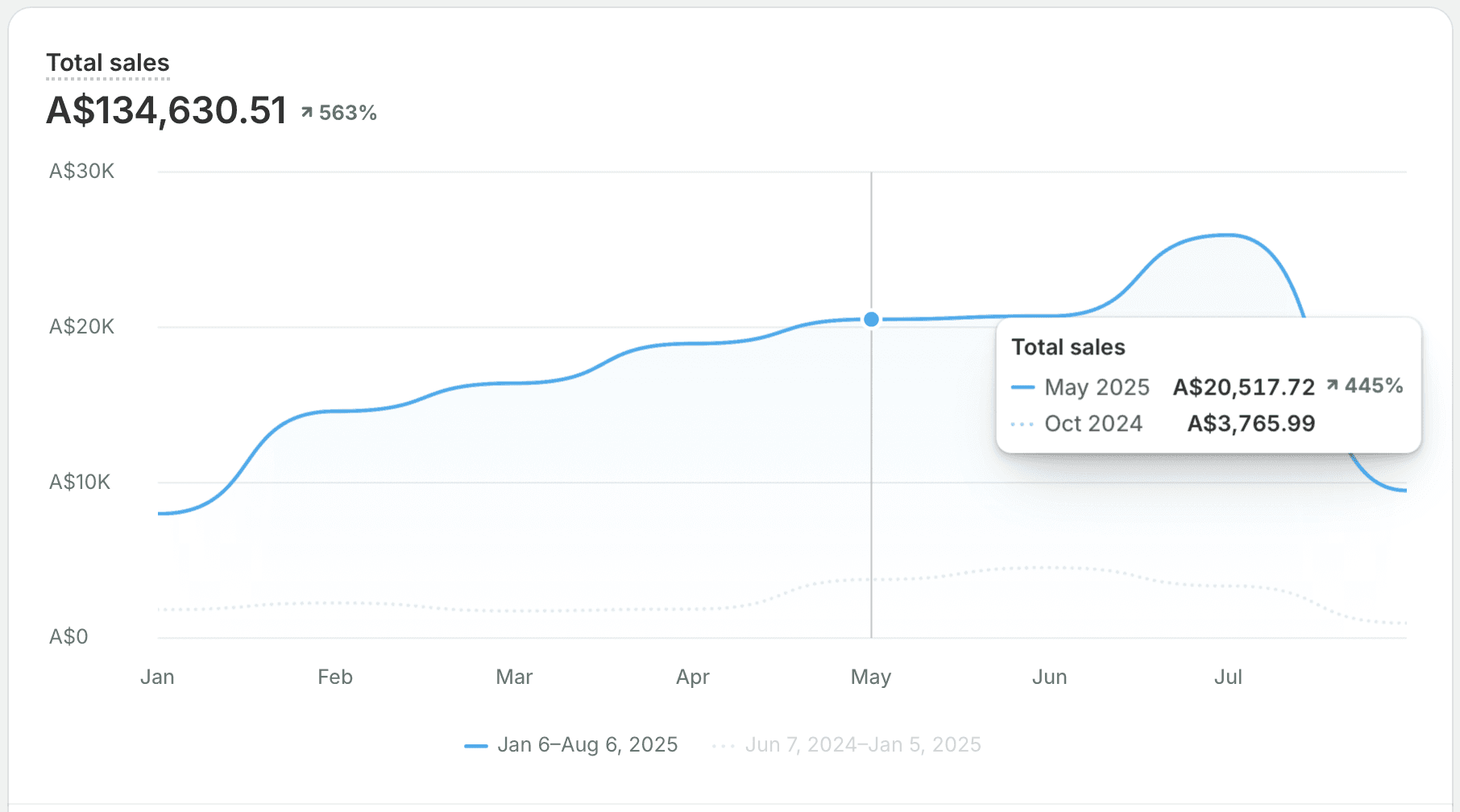
1,400+ orders completed
$25K/month recurring revenue
180K website sessions (24.9x growth)
50% of revenue from local delivery
Weekly highs of $14K+
The first three months of 2025 exceeded all of 2024.
What other retailers want to know
“How long did the migration actually take?”
One month from development start to launch.
For context, similar-sized retailers typically need 4–8 weeks for complex catalogue migrations. Unique Wholefood moved faster because the groundwork was clear: clean data, defined goals, and a tested demo that proved the approach worked.
The real timeline blocker isn’t technical complexity. It’s decision-making and data hygiene. Benjamin and Bishnu had already spent two years learning what didn’t work. That clarity accelerated everything.
“Did you lose sales during the switch?”
The store stayed live throughout.
While Magento sat half-built in the background, the old WooCommerce site kept running. The actual cutover, switching DNS to point to the new Shopify store, happened in under 30 minutes during off-peak hours.
Most well-executed migrations maintain 95–100% of organic traffic.
Unique Wholefood saw a 24.9x increase in sessions post-launch, driven largely by improved mobile performance and site speed. The platform that was supposed to be “temporary” had been holding them back more than they realised.
“What about the money already spent on Magento?”
$150K over two years. Gone.
But the alternative was spending another $50K–$250K annually keeping Magento running: hosting fees, developer retainers, security updates, bug fixes, and every simple change requiring a dev ticket.
Shopify’s all-in model eliminated that overhead. Hosting, security, platform updates, and infrastructure stability are included.
For retailers like Unique Wholefood, this typically results in lower total cost of ownership compared to self-hosted platforms. More importantly, it freed Benjamin and Bishnu to focus on their business instead of their tech stack.
“Can the team actually manage it themselves?”
This was the game-changer.
On Magento, updating a product description required either learning to code or waiting for a developer. On Shopify, Benjamin and Bishnu can run weekly promotions, adjust shipping rules, test seasonal campaigns, and update product information themselves.
The learning curve was hours, not months.
They’re not technical. They didn’t want to be. They wanted to sell organic groceries online.
Now they can.
“What happened to search rankings?”
Organic traffic increased 24.9x.
SEO was protected through comprehensive URL mapping and 301 redirects, so every old link redirected to the correct new page.
Shopify also handles key technical SEO fundamentals well: page speed, mobile optimisation, clean URL structures, and automatic sitemaps.
When migration is done properly, SEO either maintains or improves because the infrastructure is faster and more stable.
“How does mobile performance compare?”
Benjamin and Bishnu didn’t track exact mobile conversion rates pre-migration (the old platform made reliable analytics difficult), but the session growth tells the story.
Shopify’s mobile-first design, integrated mobile payments (Shop Pay, Apple Pay), and responsive themes removed friction that Magento couldn’t solve without extensive custom development.
For a health food market where customers browse on their phones while planning groceries, mobile performance directly impacts revenue.
The shift
Benjamin and Bishnu are optimistic and relieved. After four years of fighting their tech stack, they can finally build the omnichannel business they envisioned from the start.
What they can do now
Run weekly promotions themselves (no dev tickets, no months-long builds)
Update product information in minutes
Launch seasonal campaigns without technical bottlenecks
Manage shipping rules, local delivery zones, and store pickup natively
Track performance with clear dashboards
Test bundles, rewards programs, and email journeys
Make merchandising decisions based on data, not development capacity
The technical reality
Shopify handles hosting, backend updates, security, and infrastructure stability.
Vemoyo handles front-end updates, product database maintenance, system integrations, conversion optimisation, and growth strategy.
The team gained clarity on what to do each week to move key numbers, without wondering if the site would break or waiting months for simple changes.
What changed
They stopped wrestling with their website and started running their business.
The focus shifted from fixing bugs to serving customers.
The website finally works as hard as they do.